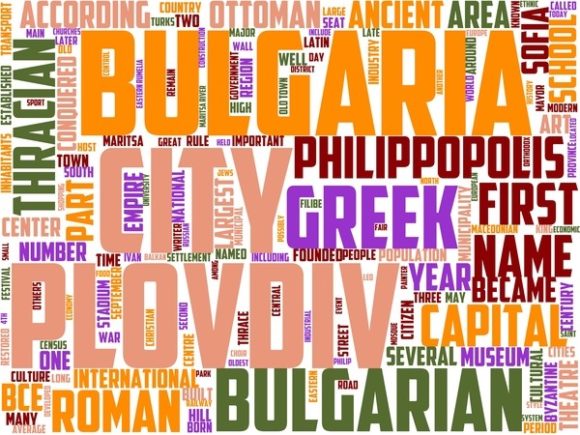
Plovdiv Wordart Tshirt: Hand-Drawn Word Cloud Art
Imagine a vibrant, hand-drawn word cloud—alive with color, rhythm, and meaning—designed not just for the page, but for life. That’s what the Plovdiv Wordart Tshirt offers: a joyful, customizable wordcloud illustration rooted in Bulgarian heritage and artistic craft. It’s more than a graphic—it’s a flexible visual tool born from real ink, paper, and intention. Each element is carefully drawn by hand, then digitized to retain warmth and texture, making it ideal for print and digital use across apparel, home goods, stationery, and branding.
Why This Word Cloud Feels Different
Most word clouds are generated automatically—algorithmic, uniform, and often sterile. The Plovdiv Wordart Tshirt breaks that mold. Its words—like “creativity,” “community,” “joy,” “Plovdiv,” “design,” “tradition,” and “inspiration”—are arranged organically, with varying weights, angles, and playful spacing. No two words overlap identically. No gradient feels forced. The palette is rich but balanced: terracotta, cobalt, saffron, sage, and deep indigo—colors inspired by Plovdiv’s ancient walls, Thracian mosaics, and contemporary street art.
This isn’t clipart. It’s artwork with cultural resonance and tactile authenticity—designed to feel personal, even when scaled or recolored.
How Creators & Designers Use It
For illustrators and surface pattern designers, the Plovdiv Wordart Tshirt serves as a ready-made motif that works beautifully on fabric repeats, textile swatches, or ceramic transfers. Its hand-drawn imperfections add charm to repeat patterns—no need to over-edit or “smooth out” the lines. Many textile artists layer it with watercolor textures or stitch over printed versions for mixed-media garments.
Graphic designers appreciate its vector-ready format (EPS/SVG) and layered PSD file. They’ll isolate individual words to build custom slogans, adjust spacing for banner layouts, or recolor sections to match brand guidelines—all without losing integrity. One freelance designer used it as the central graphic in a workshop invitation series, swapping out background colors per event theme while keeping the word structure intact.
What Educators & Workshop Leaders Value
In classrooms or creative workshops, this word cloud becomes a conversation starter—not just about language, but about place, identity, and expression. A Bulgarian history teacher prints it on poster-sized paper and asks students to identify words tied to local landmarks (like “Hisar Kapia” or “Thracian”) or values (“hospitality,” “resilience”). An English-as-a-Second-Language instructor uses it for vocabulary mapping: learners circle synonyms, group words by emotion or action, or write short stories using three selected terms.
The hand-drawn quality lowers the barrier to engagement. It doesn’t feel intimidating or overly polished—just inviting, open-ended, and human.
Small Business Owners & Makers Find Practical Flexibility
A small-batch clothing brand in Sofia uses the Plovdiv Wordart Tshirt design on organic cotton tees and tote bags—adding their logo discreetly in the corner. They love that it scales cleanly from pocket-sized embroidery to full-back prints. No pixelation. No licensing headaches. It’s royalty-free for commercial use, including physical products and digital promotions.
A handmade ceramics studio applies the word cloud as a decal on mugs and coasters, choosing muted tones to complement their stoneware glazes. For them, flexibility matters most: being able to extract single words (“Plovdiv,” “craft,” “earth”) lets them create cohesive mini-collections without commissioning new art each time.
Hobbyists & DIY Enthusiasts Love Its Approachability
You don’t need Procreate or Illustrator to get started. Print it on sticker paper and cut out favorite words for scrapbooks or bullet journals. Trace it onto fabric with transfer paper for custom pillow covers. Project it onto a wall with a phone and paint it freehand for a gallery wall piece. One parent turned it into a birthday banner for their child’s “Bulgarian Heritage Day” party—printing letters separately, mounting them on cardboard, and arranging them like a mural.
Beginners value how little technical skill it demands to produce something meaningful. There’s no steep learning curve—just curiosity, a pair of scissors, and maybe some glue.
What Professionals Prioritize—and What Beginners Might Not Yet Consider
Experienced users look closely at file structure: Are layers named clearly? Can fonts be swapped if needed? Is transparency preserved? With the Plovdiv Wordart Tshirt, yes—the SVG retains editable paths, the PSD includes labeled groups (background, main cluster, accent words), and the PNGs come in multiple resolutions (72ppi for web, 300ppi for print).
Beginners may not think about DPI or vector vs. raster—but they’ll notice whether their printed t-shirt looks crisp, or if the sticker peels cleanly off the sheet. And it does. Because the source files were built with both ends in mind.
Long-Term Usefulness Across Projects
This isn’t a one-off decoration. Think of it as a visual vocabulary you return to again and again:
- Bloggers embed it in Pinterest pins for posts about Eastern European travel or creative entrepreneurship.
- Authors adapt phrases from it into chapter headers or book cover accents for memoirs rooted in Balkan identity.
- Event planners use it in digital programs for cultural festivals—scaling words to highlight themes like “music,” “storytelling,” or “connection.”
- Home decorators frame a large print as wall art above a reading nook, pairing it with vintage Bulgarian postcards and woven textiles.
Its strength lies in quiet versatility—not shouting for attention, but enriching whatever it touches.
Does It Fit Your Next Project?
If your goal is speed + soul—if you want art that feels handmade but works digitally—if you’re balancing budget with quality and meaning—the Plovdiv Wordart Tshirt lands in that sweet spot. It’s not for those needing photorealistic renders or AI-generated novelty. But if you value intention over automation, warmth over perfection, and cultural texture over trend-chasing, it’s worth exploring.
Ask yourself: Do I need something I can use today—with no setup—and still reach for five years from now? Will this help me express a feeling, a place, or a value—not just fill space? If yes, this word cloud isn’t just decoration. It’s a quiet collaborator.